CUDIMM Standard Set to Make Desktop Memory a Bit Smarter and a Lot More Robust
Published: Jun 21nd 2024 10:30am on AnandTech
While the new CAMM and LPCAMM memory modules for laptops have garnered a great deal of attention in recent months, it's not just the mobile side of the PC memory industry that is looking at changes. The desktop memory market is also coming due for some upgrades to further improve DIMM performance, in the form of a new DIMM variety called the Clocked Unbuffered DIMM (CUDIMM). And while this memory isn't in use quite yet, several memory vendors had their initial CUDIMM products on display at this year's Computex trade show, offering a glimpse into the future of desktop memory.
A variation on traditional Unbuffered DIMMs (UDIMMs), Clocked UDIMMs (and Clocked SODIMMs) have been created as another solution to the ongoing signal integrity challenges presented by DDR5 memory. DDR5 allows for rather speedy transfer rates with removable (and easily installed) DIMMs, but further performance increases are running up against the laws of physics when it comes to the electrical challenges of supporting memory on a stick – particularly with so many capacity/performance combinations like we see today. And while those challenges aren't insurmountable, if DDR5 (and eventually, DDR6) are to keep increasing in speed, some changes appear to be needed to produce more electrically robust DIMMs, which is giving rise to the CUDIMM.
Standardized by JEDEC earlier this year as JESD323, CUDIMMs tweak the traditional unbuffered DIMM by adding a clock driver (CKD) to the DIMM itself, with the tiny IC responsible for regenerating the clock signal driving the actual memory chips. By generating a clean clock locally on the DIMM (rather than directly using the clock from the CPU, as is the case today), CUDIMMs are designed to offer improved stability and reliability at high memory speeds, combating the electrical issues that would otherwise cause reliability issues at faster memory speeds. In other words, adding a clock driver is the key to keeping DDR5 operating reliably at high clockspeeds.
All told, JEDEC is proposing that CUDIMMs be used for DDR5-6400 speeds and higher, with the first version of the specification covering speeds up to DDR5-7200. The new DIMMs will also be drop-in compatible with existing platforms (at least on paper), using the same 288-pin connector as today's standard DDR5 UDIMM and allowing for a relatively smooth transition towards higher DDR5 clockspeeds.
The Cooler Master V850 SFX Gold ATX 3.0 PSU Review: Small Scale
Published: Jun 20nd 2024 11:00am on AnandTech
In response to the increasing popularity of compact and portable gaming PCs in the past couple of years, we've seen several PC peripheral manufacturers release larger collections of SFX form factor cases and power supplies. Chief among these has been Cooler Master, where the prolific PC part vendor recently expanded their SFX series to include ATX 3.0-compliant PSUs. This has finally given the company a modern, miniature platform that can drive the latest NVIDIA video cards.
Today we're looking at Cooler Master's V850 SFX Gold, which represents a more budget-friendly option in the SFX power supply market compared to their previously reviewed V1100 SFX Platinum. The SFX Gold series includes four models, ranging from 550W to 850W, with the 850W unit that we are reviewing today being the most potent. This 850-Watt power supply carries an 80 Plus Gold certification and is designed for high-performance gaming and workstation builds. As the top-tier model in the SFX Gold series, it offers substantial power output for an SFX unit and maintains ATX 3.0 compliance, including a 12VHPWR connector in a compact SFX format.
Western Digital Rolls Out Updated Budget WD Blue SN5000 SSDs, Adds 4TB Model
Published: Jun 20nd 2024 10:00am on AnandTech
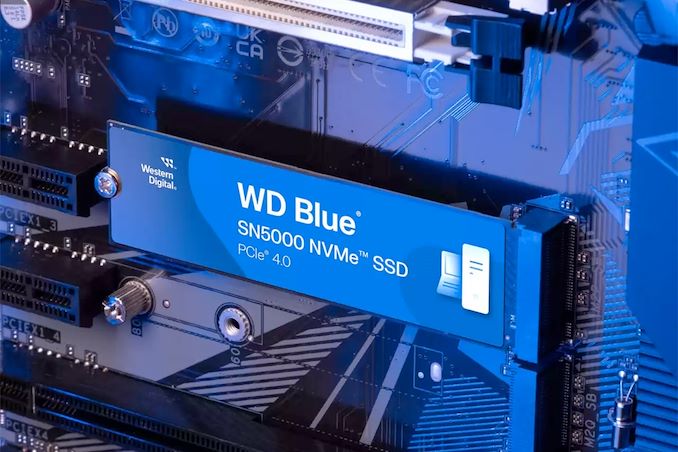
Western Digital expanded its WD Blue NVMe family of budget SSDs this week with the introduction of the the WD Blue SN5000 series, an updated lineup of SSDs that, among other things, adds a 4 TB model. Being budget drives, the SN5000 series is not going to be a performance monster, but their combination of capacity, reliability, and relatively low price could make them popular both among casual buyers and among enthusiasts looking for relatively cheap bulk solid-state storage.
Western Digital's WD Blue SN500 NVMe drives come in an M.2-2280 form-factor and are based around an in-house WD controller (the company rarely discloses their codenames these days). WD's controller is a 4 channel, DRAMless design, which is what we typically see for budget and mainstream SSDs. Externally, the controller supports a PCIe 4.0 x4 connection, and per WD's specifications, even this budget drive should be fast enough to put the additional bandwidth of PCIe 4.0 to good use. All of the drives are single-sided, and are covered with a thin graphene heatspreader for heat dissipation.
More surprising here is WD's choice of NAND. According to the company, they are using a mix of different generations and different types of NAND, depending on the model. The 500GB/1TB/2TB models are using WD/Kioxia's older 112 layer BiCS 5 TLC NAND. Meanwhile the new 4TB capacity is being enabled with the company's newer BiCS 6 NAND – but the QLC variety. All drive capacities are being backed by the same controller, so there is a thread of commonality between them, but at a high level WD seems to be using the higher performance of BiCS 6 to offset the switch from TLC to QLC.
WD Blue SN5000 SSD Specifications Capacity 500 GB 1 TB 2 TB 4 TB Controller WD In-House: 4 Channel, DRAMless NAND Flash WD BiCS 5 TLC WD BiCS 6 QLC Form-Factor, Interface Single-Sided M.2-2280, PCIe 4.0 x4, NVMe Sequential Read 5000 MB/s 5150 MB/s 5150 MB/s 5500 MB/s Sequential Write 4000 MB/s 4900 MB/s 4850 MB/s 5000 MB/s Random Read IOPS 460K 730K 650K 690K Random Write IOPS 770K 800K Peak Power 6.3W? SLC Caching Yes TCG Pyrite Encryption 2.01 Warranty 5 Years Write Endurance 300 TBW 0.33 DWPD 600 TBW 0.33 DWPD 900 TBW 0.24 DWPD 1200 TBW 0.16 DWPD MSRP $70 $80 $140 $280When it comes to performance, the WD Blue SN5000 series drives are rated for read speeds between 5000 MB/sec and 5500 MB/sec depending on the capacity, while write speeds range from 4000 MB/sec to 5000 MB/sec. As for random performance, we are looking at up to 690K 4K IOPS random read speeds as well as up to 900K 4K IOPS random write speeds for the highest capacity model, while the lower-end 500 GB model is rated for 460K/770K 4K random read/write IOPS.
Overall, even with the 4TB model using QLC NAND, WD is touting it at offering better performance than any of the lower capacity models. We're accustomed to seeing QLC drives come in behind TLC drives in this respect, so that newer generation of NAND is doing a lot of heavy lifting to put it ahead of the other models.
This goes for write endurance as well; the 4TB QLC model has the highest endurance rating, at 1200 TB written, followed by 900, 600, and 300 TBW for the lower capacity models respectively. Depending on the specific drive model, this works out to between 300 to 600 drive writes in total, or around 0.164 drive writes per day, which is typical for drives in this class.
Overall, the new drive family supplants WD's previous generation of Blue drives, last year's SN580 series. Comparatively, the SN5000 drives are rated to offer better sequential and random drive performance at every tier. And the the tiny 250GB drive has been dropped entirely, making room for the new high-capacity 4TB model at the high-end while the 500GB drive model is the new entry-level capacity.
While the WD Blue SN5000 NVMe family seems to be well positioned to be a low-cost drives meant to compete aggressively on the pricing, for now WD's launch prices are a bit ambitious. The $70 price tag for the 500 GB version is pretty typical, while the $280 recommended price for a 4TB model puts it in a weird spot between a number of other 4TB drives. The tad slower Crucial P3 Plus 4TB can be found for $217, while WD's own considerably faster WD_Black SN850X 4TB is only $30 more, at $310. Ultimately, given that Western Digital's Blue drives are meant to be inexpensive SSDs, we expect retail drive prices to catch up with market realities shortly.
NVIDIA Closes Above $135, Becomes World’s Most Valuable Company
Published: Jun 18nd 2024 5:40am on AnandTech
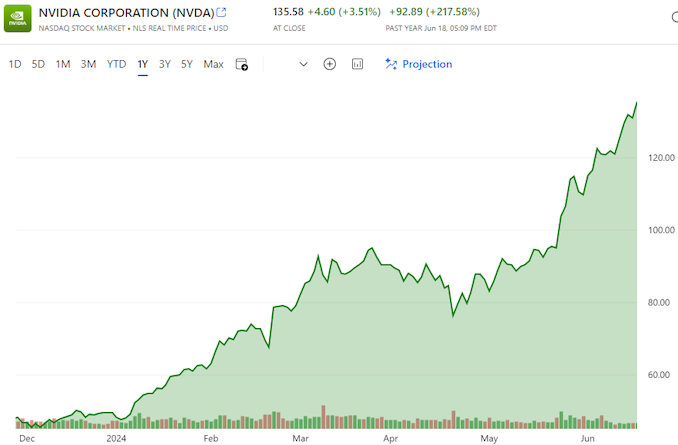
Thanks to the success of the burgeoning market for AI accelerators, NVIDIA has been on a tear this year. And the only place that’s even more apparent than the company’s rapidly growing revenues is in the company’s stock price and market capitalization. After breaking into the top 5 most valuable companies only earlier this year, NVIDIA has reached the apex of Wall Street, closing out today as the world’s most valuable company.
With a closing price of $135.58 on a day that saw NVIDIA’s stock pop up another 3.5%, NVIDIA has topped both Microsoft and Apple in valuation, reaching a market capitalization of $3.335 trillion. This follows a rapid rise in the company’s stock price, which has increased by 47% in the last month alone – particularly on the back of NVIDIA’s most recent estimates-beating earnings report – as well as a recent 10-for-1 stock split. And looking at the company’s performance over a longer time period, NVIDIA’s stock jumped a staggering 218% over the last year, or a mere 3,474% over the last 5 years.
NVIDIA’s ascension continues a trend over the last several years of tech companies all holding the top spots in the market capitalization rankings. Though this is the first time in quite a while that the traditional tech leaders of Apple and Microsoft have been pushed aside.
Market Capitalization Rankings Market Cap Stock Price NVIDIA $3.335T $135.58 Apple $3.317T $446.34 Microsoft $3.285T $214.29 Alphabet $2.170T $176.45 Amazon $1.902T $182.81Driving the rapid growth of NVIDIA and its market capitalization has been demand for AI accelerators from NVIIDA, particularly the company’s server-grade H100, H200, and GH200 accelerators for AI training. As the demand for these products has spiked, NVIDIA has been scaling up accordingly, repeatedly beating market expectations for how many of the accelerators they can ship – and what price they can charge. And despite all that growth, orders for NVIDIA’s high-end accelerators are still backlogged, underscoring how NVIDIA still isn’t meeting the full demands of hyperscalers and other enterprises.
Consequently, NVIDIA’s stock price and market capitalization have been on a tear on the basis of these future expectations. With a price-to-earnings (P/E) ratio of 76.7 – more than twice that of Microsoft or Apple – NVIDIA is priced more like a start-up than a 30-year-old tech company. But then it goes without saying that most 30-year-old tech companies aren’t tripling their revenue in a single year, placing NVIDIA in a rather unique situation at this time.
Like the stock market itself, market capitalizations are highly volatile. And historically speaking, it’s far from guaranteed that NVIDIA will be able to hold the top spot for long, never mind day-to-day fluctuations. NVIDIA, Apple, and Microsoft’s valuations are all within $50 billion (1.%) of each other, so for the moment at least, it’s still a tight race between all three companies. But no matter what happens from here, NVIDIA gets the exceptionally rare claim of having been the most valuable company in the world at some point.
(Carousel image courtesy MSN Money)
Extreme PSUs Incoming: Enermax, Leadex, and Seasonic at Up to 2800W
Published: Jun 18nd 2024 11:00am on AnandTech

Just several years ago, we were impressed to witness a 2,000W power supply for mining systems at Computex. But with arrival or AMD's Ryzen Threadripper WX and Intel's Xeon W-3400-series – CPUs that can devour all the way to 900W under heavy loads – as well as NVIDIA's GeForce RTX 4090 graphics cards (or, well, H100 PCIe for AI), 2,000W PSUs are no longer entirely overkill. As new processors have raised the bar on power consumption, so has the bar been raised on PSUs themselves. as evidenced by this year's show, with several power supply manufacturers showing off new extreme PSU designs that go as high as 2,800W.
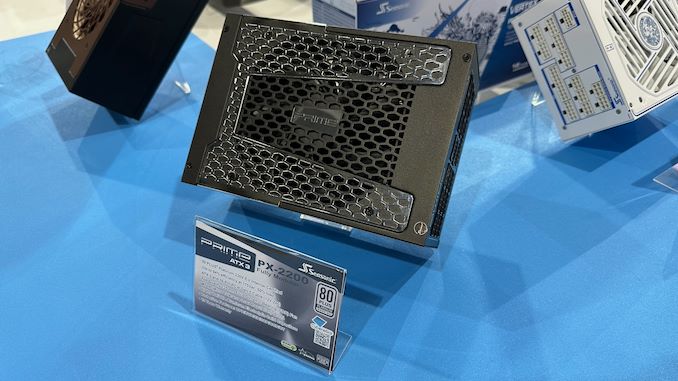
To that end, I will begin the story from the least 'extreme' PSU that I saw at Computex and this is Seasonic's Prime PX-2200 80+ Platinum-badged ATX 3 PSU. The unit handled a custom-built AMD Ryzen Threadripper Pro 7995WX-based PC with 256 GB DDR5-4800 memory and four Gigabyte GeForce RTX 4090 graphics cards without breaking a sweat at the trade show.
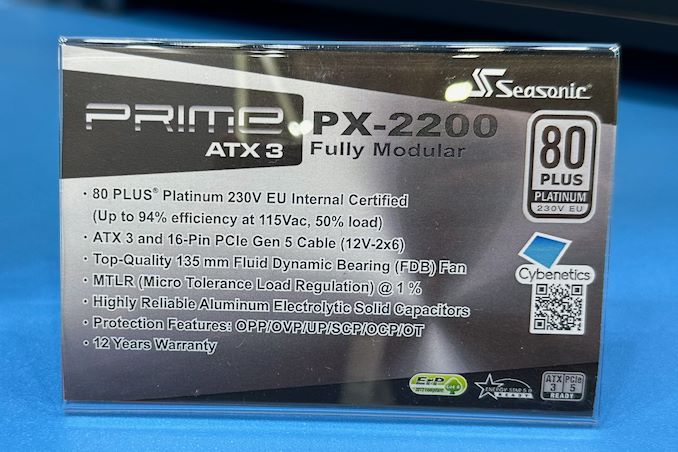
It is noteworthy that the Prime PX-2200 has only one 16-pin 12V-2x6 power connector for graphics cards, so Seasonic used adapters to power three out of four RTX 4090 boards.
Gallery: Seasonic's Prime PX-2200 ATX 3 PSU


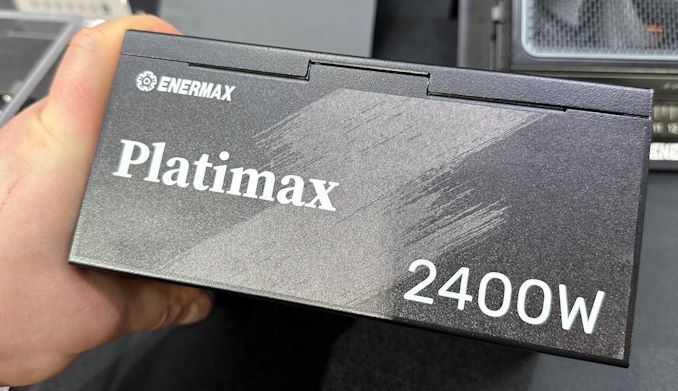
Moving on to a more powerful PSU, which is Enermax's Platimax 2400W 80+ Platinum-rated ATX 3.1 power supply. This one has two 12V-2×6 auxiliary power connectors for graphics cards, which is more than enough for an extreme gaming system. Enermax did not showcase this one in action at Computex, perhaps, because it is almost half of a year away and yet has to pass all the necessary tests.

The Enermax Platimax 2400W is set to enter mass production this December and will be available for $499, according to the company.
Gallery: Enermax's Platimax 2400W ATX 3.1 PSU


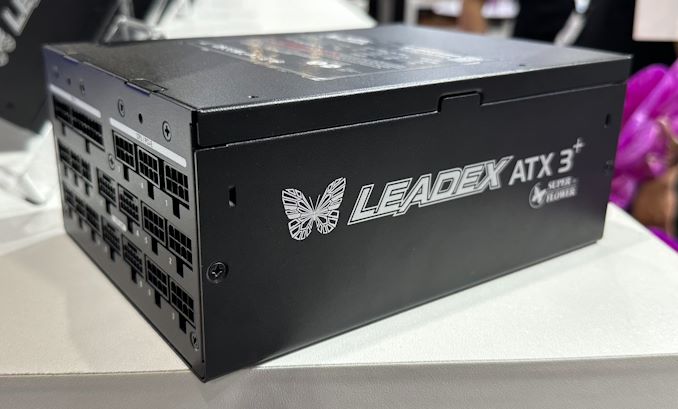
But what is 2,400W, if you can get all 2,800W? Well, Super Flower's Leadex SF-2800F14HP 80+ Platinum-badged ATX 3.1 PSU can deliver 2,800W to a high-performance CPU and four graphics cards over five voltage rails. This power supply is well beyond what even a high-end desktop needs, and seems aimed more at workstation-style AI systems for research or on-prem inference. This one is expected to be available later this year for around $599, according to a representative at the booth.
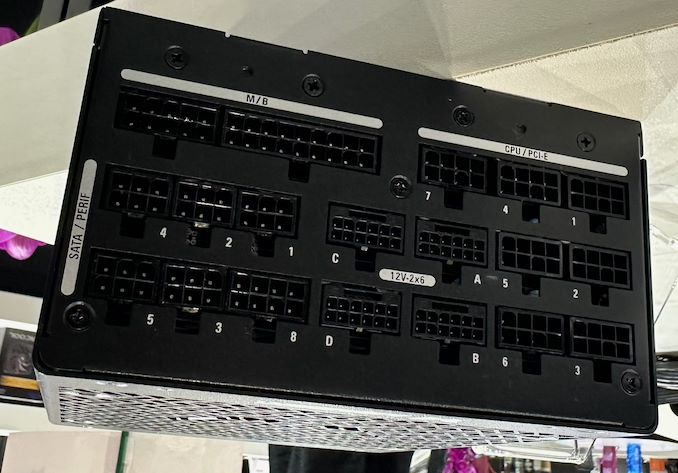
Gallery: Super Flower Leadex SF-2800F14HP ATX 3.1 PSU


It goes without saying that these extreme power supplies have a rather limited market. Not only because of the small base of systems that could ever need a PSU that could be measured as a multiple of horsepower (745W), but also because of outright mains compatibility – the standard US 15A/120V outlet can't drive much more than a 1600W PSU. So power supplies like these are only readily usable in Europe, and in locations in the US with non-standard outlets. Then again, if you need a 2,800W PSU, you can probably afford the electrician needed to get one wired up.
DeepCool Adds Vapor Chamber to an Air Cooler: AIO-Like Performance at Air Cooler Reliability
Published: Jun 18nd 2024 8:00am on AnandTech
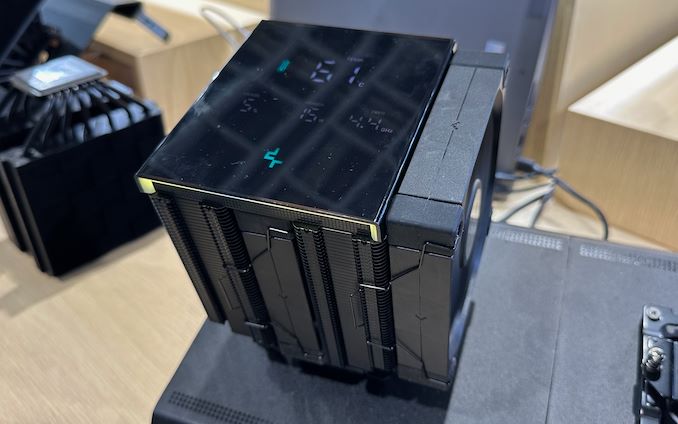
While the market for high-end CPU coolers has decidedly shifted towards closed-loop all-in-one liquid coolers over the last several years, air cooling remains alive and well. Even at the high-end, there are still further improvements and innovations being made, such as DeepCool's vapor chamber-based tower cooler, which was demonstrated at Computex.

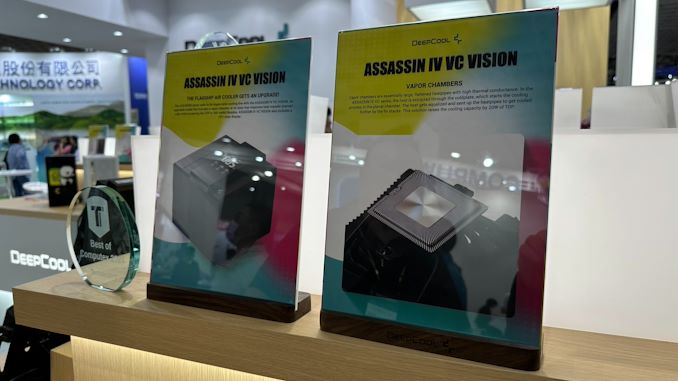
Named the Assassin IV VC Vision, DeepCool's design is an advanced concept vehicle that equips a tower cooled with both a vapor chamber in the base as well as has an LCD pad on top for extra flourish. The vapor chamber is said to increase the cooling capacity by 20W, adding a bit more of an edge to an already very powerful tower cooler design.
While we expect this one to come to market eventually, don't be surprised if both vapor chamber and the screen to land on other products together or separately. For example, the massive DeepCool Assassin IV VC Vision has a more compact brother that has a screen and a vapor chamber.
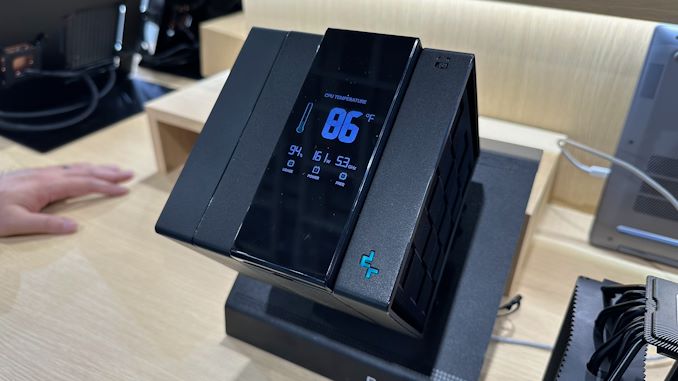
The unit builds on top of the already monstrous DeepCool Assassin IV that comes with seven 0.6-mm heat pipes and can mount up to three 120/140mm fans, depending on installation (one is magnetically attached). With a weight of 1.575 kilograms – almost entirely copper and aluminum – this one is already good enough to cool down even the highest-performing CPUs.
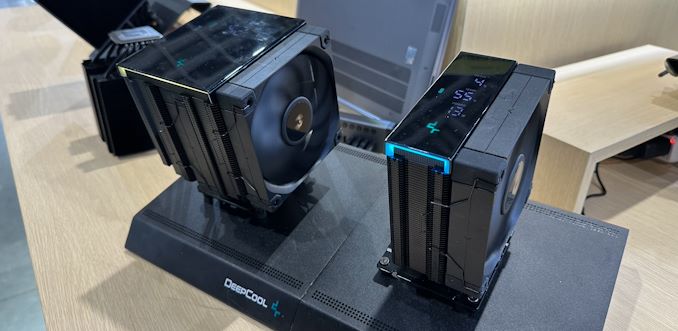
DeepCool is currently trying to figure out recommended pricing for its Assassin IV VC Vision cooler, but the original Assassin IV costs $99.99, so expect the unit with a vapor chamber and a screen to build on top of that.
Realtek Previews Platform for Sub-$100 5GbE Network Switches
Published: Jun 17nd 2024 4:30am on AnandTech
One of the more subtle trends at this year's Computex was that the majority of high-end motherboards now come equipped with a 5GbE network controller. At present, this might be considered a limited benefit as 5GbE and 10GbE switches and routers are still pretty expensive. But Realtek is planning on tackling the issue from both ends, as the company is preparing a hardware platform for sub-$100 5GbE switches.
Realtek’s quad-port 5GbE switch platform consists of five key chips: one RTL9303 switch system-on-chip, and four RTL8251B 5GbE physical interfaces (PHYs). The chips are accompanied by various other components, such as power management ICs, but in general it relies solely on in-house developed components, which is why it can be made so cheap.
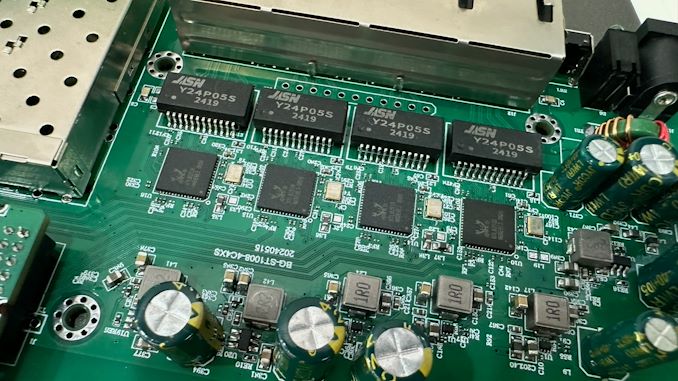
RealTek's platform is meant for home and small offices, which is reflected in the switch's feature set. This is a simple, unmanaged switch with a handful of ports, making it ideal for linking up a few systems, while enterprise users will likely find it a bit too basic.
Segmenting the market like this is ultimately critical for bringing down the price of hardware. The bulk of 5GbE/10GbE switches on the market today are more enterprise-focused managed switches, which carry more features and a price premium to match. So developing a stripped-down platform for cheaper consumer switches is a huge development that should finally make it economical for consumers to adopt faster networking hardware, similar to 2.5GbE a few years ago.
At present, 2.5GbE switches are running at around $20/port, so RealTek's sub-$100 target for a 4-port switch aims to bring 5GbE in at just a slightly higher price tag of $25/port. Or, compared to the handful of unmanaged 10GbE switches on the market, which average $60/port, this will be less than half the price (though at half the bandwidth).
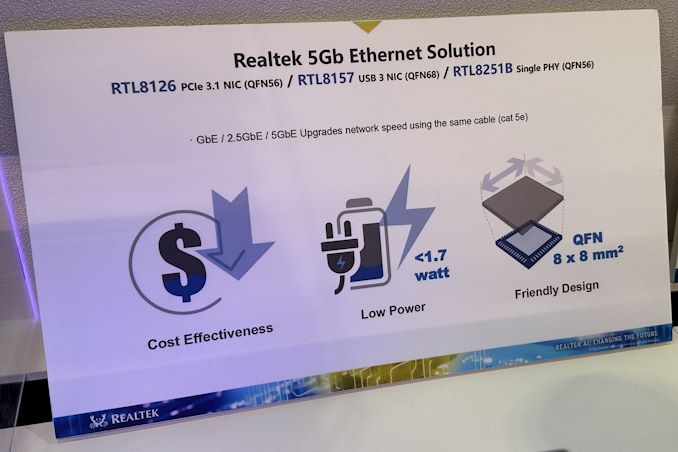
The proliferation of cheap 5GbE network switches will also mark a notable inflection point in Ethernet hardware design, as it's the fastest standard that is rated to work the ubiquitous Cat 5e cable. The NBASE-T standard was penned almost a decade ago in order to cover the missing-middle between 1GbE and 10GbE, while getting more bandwidth out of existing, widely-deployed Cat 5e cabling. So with the release of consumer 5GbE gear, the standard's goals are finally coming to fruition – though it does mean we're finally reaching the end of the road for the oldest network cabling still widely in use.
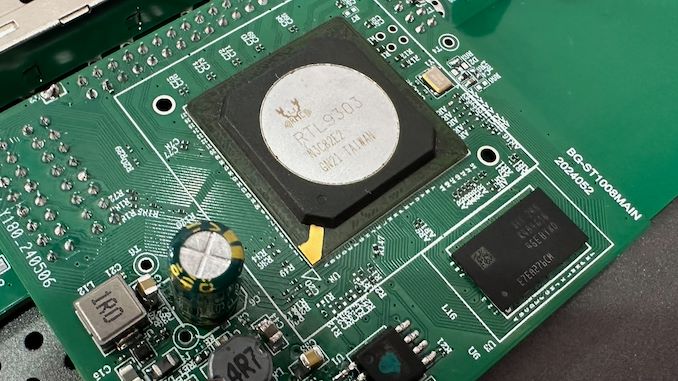
For now, Realtek is only talking about one customer offering a sub-$100 5GbE switch this September, but something tells me that other partners of the company will come up with similar devices soon enough. As a result of the competition, prices could get even lower, which is always good for buyers.
These benefits should also funnel into Wi-Fi 7 routers, to a limited extent. Wired backhaul speeds need to keep pace with ever-faster Wi-Fi standards in order to keep those newer radios fed, so it's not a coincidence that cheaper 5GbE is finally coming right as Wi-Fi 7 is taking off.
Overall, the company's 5GbE switch platform is part of a larger ecosystem of 5GbE hardware that Realtek was showing off at Computex. In addition to RTL8251B 5GbE PHYs and RTL9303 switch SoC, the company is also preparing their RTL8126 PCIe 3.1 network controller, and RTL8157 NIC for USB dongles.
MiTAC/Tyan Shows Off Motherboard and Servers for Intel's Xeon 6 CPUs
Published: Jun 14nd 2024 6:00am on AnandTech
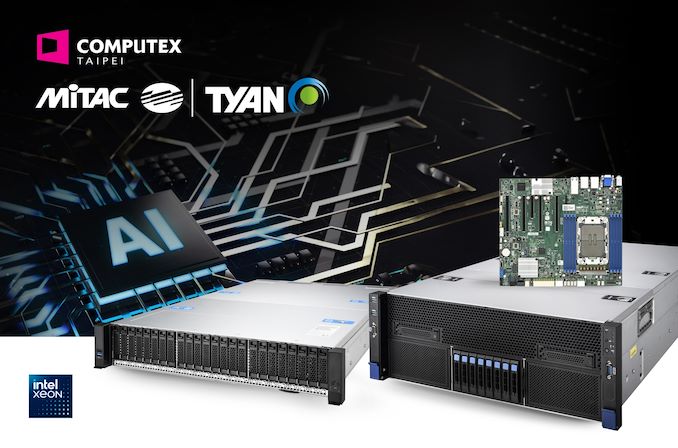
Later this year Intel is set to introduce its Xeon 6-branded processors, codenamed Granite Rapids (6x00P) and Sierra Forest (6x00E). And with it will come a new slew of server motherboards and pre-built server platforms to go with it. On the latter note, this will be the first generation where Intel won't be offering any pre-builts of its own, after selling that business off to MiTAC last year.
To that end, MiTAC and its subsidiary Tyan were at this year's event to demonstrate what they've been up to since acquiring Intel's server business unit, as well as to show off the server platforms they're developing for the Xeon 6 family. Altogether, the companies had two server platforms on display – a compact 2S system, and a larger 2S system with significant expansion capabilities – as well as a pair of single-socket designs from Tyan.
The most basic platform that MiTAC had to show is their TX86-E7148 (Katmai Pass), a half-width 1U system that's the successor to Intel's D50DNP platform. Katmai Pass has two CPU sockets, supports up to 2 TB of DDR5-6400 RDIMMs over 16 slots (8 per CPU), and has two low-profile PCIe 5.0 x16 slots. Like its predecessor, this platform is aimed at mainstream servers that do not need a lot of storage or room to house bulky add-in cards like AI accelerators.
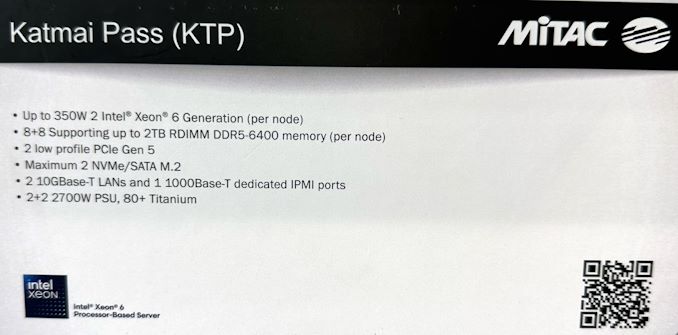
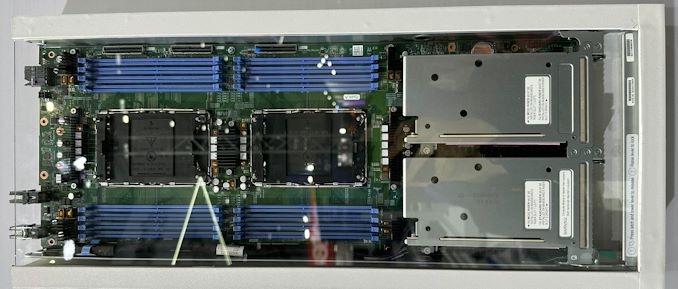
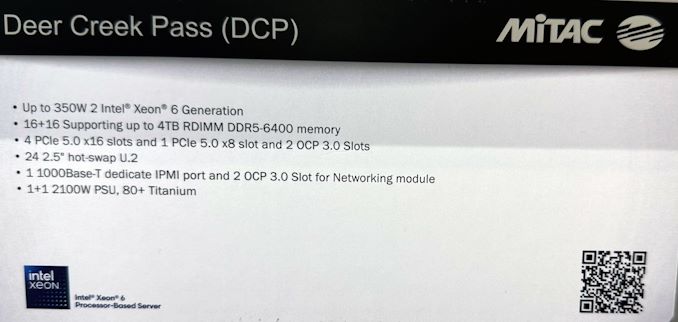
The company's other platform is TX77A-E7142 (Deer Creek Pass), a considerably more serious offering that replaces Intel's M50FCP platform. This board can house up to 4 TB of DDR5-6400 RDIMMs over 32 slots (16 per CPU with 2DPC), four PCIe 5.0 x16 slots, one PCIe 5.0 x8 slot, two OCP 3.0 slots, and 24 hot-swap U.2 bays. Deer Creek Pass can be used both for general-purpose workloads, high-performance storage, as well as workloads that require GPUs or other special-purpose accelerators.
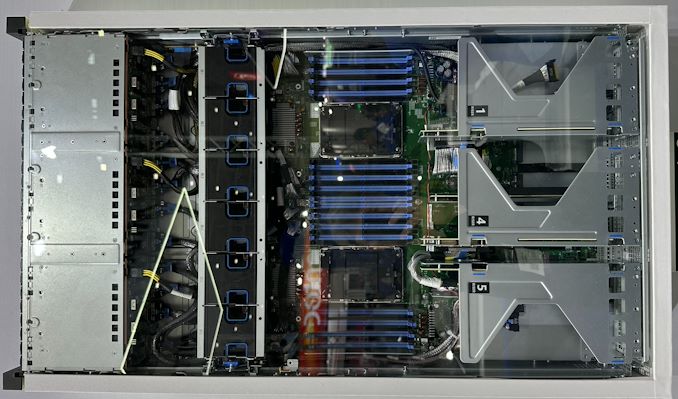
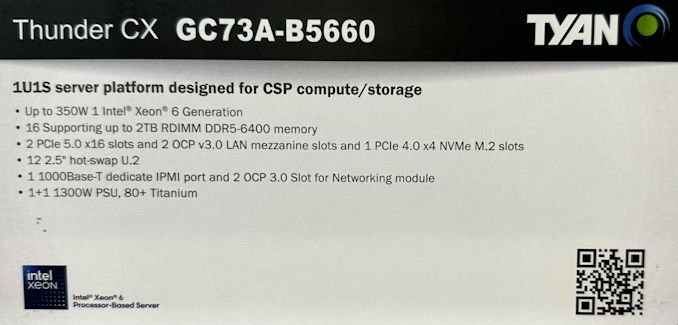
Meanwhile Tyan had the single-socket Thunder CX GC73A-B5660 on display. That system supports up to 2 TB of DDR5-6400 memory over 16 RDIMMs and offers two PCIe 5.0 x16 slots, one PCIe 4.0 x4 M.2 slot, two OCP 3.0 slots, and 12 hot-swappable U.2 drive bays.
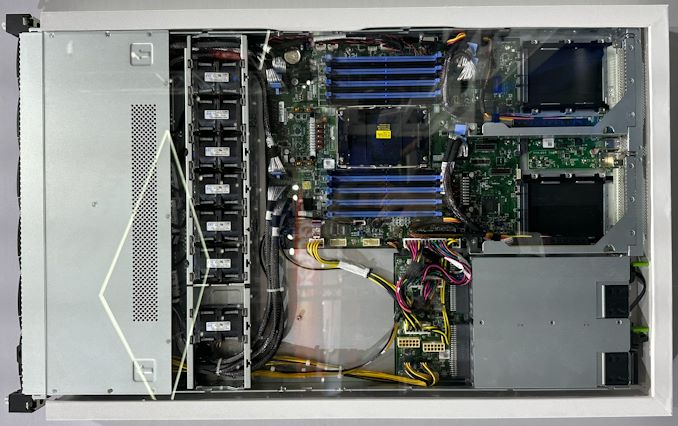
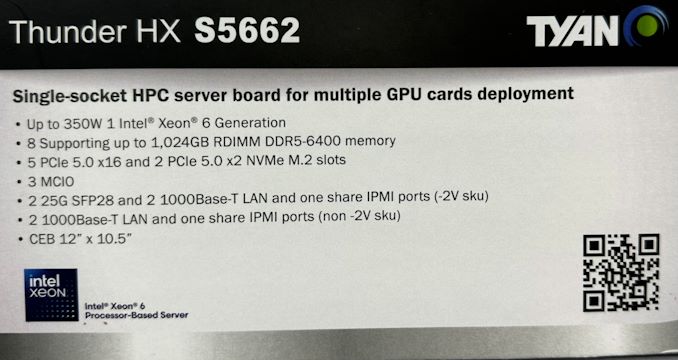
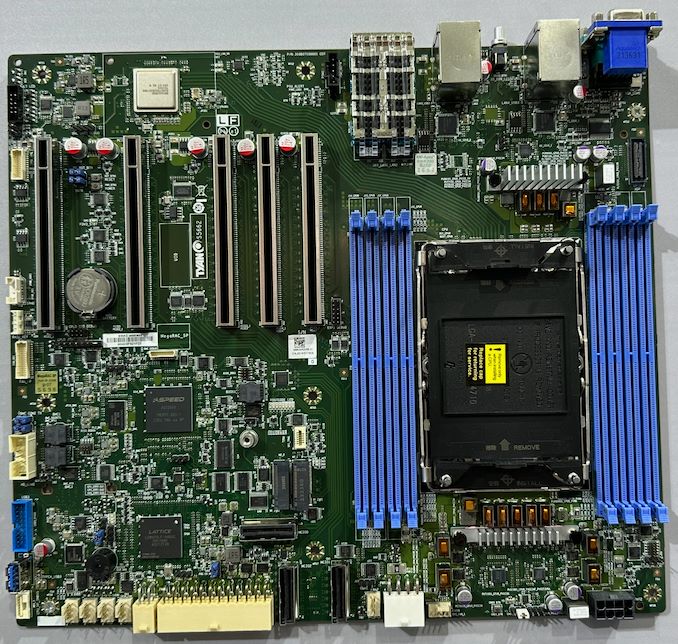
Finally, Tyan's Thunder HX S5662 is an HPC server board specifically designed to house multiple AI accelerators and other large PCIe cards. This board supports one Xeon 6 6700 processor, up to 1 TB of memory over eight DDR5-6400 RDIMMs, and has five tradiitonal PCIe 5.0 x16 slots as well as two PCIe 5.0 x2 M.2 slots for storage.
MiTAC is expected to start shipments of these new Xeon 6 motherboards in the coming months, as Intel rolls out its next-generation datacenter CPUs. Pricing of these platforms is unknown for now, but expect it to be comparable to existing servers.
Silicon Motion Demos Low-Power PCie 5.0 SSD Controller: SM2508
Published: Jun 14nd 2024 9:00am on AnandTech
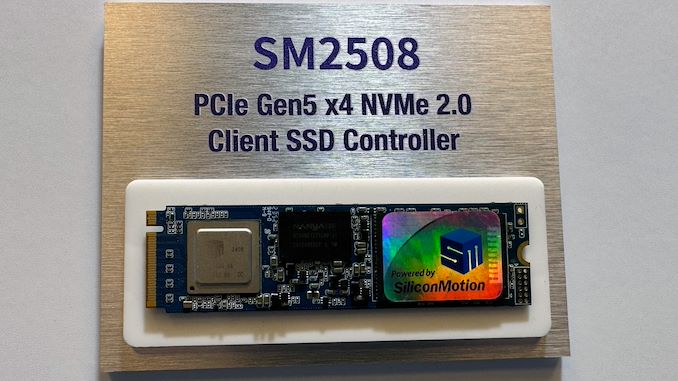
Rounding out our Computex 2024 SSD controller news, let's talk about the final major controller vendor at the show: Silicon Motion. Silicon Motion has been somewhat late to the PCIe Gen5 SSD party, as its rival Phison has been offering their high-end PS5026-E26 controller for almost 18 months now. But as Silicon Motion gets ready to make the transition to PCIe 5.0, the company has a trump card up its sleeve: the SM2508 controller, an energy-efficient high-end SSD controller that is intended for lower-power drives.
A PCIe Gen5 x4 controller, SMI's SM2508 boasts a very low active power consumption of 3.5W. Which, installed in an M.2 SSD, is intended to allow drive manufacturers to built 7 Watt (or lower) SSDs, according to the company. The SM2508 is made on TSMC's N6 process technology, which is a 7nm-class fabrication node with an optical shrink, which will make it one of the (if not the) most advanced controllers on the market once it ships. The relatively sophisticated node allows Silicon Motion to pack more cores and more features into its controller while keeping its power consumption in check – not to mention the chip size.
Silicon Motion NVMe Client SSD Controller Comparison SM2508 SM2264 SM2268XT2 SM2269XT Market Segment High-End Mainstream Manufacturing Process 6nm 12nm 12nm 12nm CPU Cores 4x Cortex R8 4x Cortex R8 2x Cortex R8 2x Cortex R8 Error Correction 4K+ LDPC 4K LDPC 4K+ LDPC 4K LDPC DRAM DDR4, LPDDR4X DDR4, LPDDR4X No No Host Interface PCIe 5.0 x4 PCIe 4.0 x4 PCIe 4.0 x4 PCIe 4.0 x4 NVMe Version NVMe 2.0 NVMe 1.4 NVMe 2.0 NVMe 1.4 NAND Channels, Interface Speed 8 ch, 3600 MT/s 8 ch, 1600 MT/s 4 ch, 3600 MT/s 4 ch, 1600 MT/s Sequential Read 14.5 GB/s 7.5 GB/s 7.4 GB/s 5.1 GB/s Sequential Write 14 GB/s 7 GB/s 6.7 GB/s 4.8 GB/s 4KB Random Read IOPS 2500k 1300k 1200k 900k 4KB Random Write IOPS 2500k 1200k 1200k 900kUnder the hood, the front-end of the SM2508 SSD controller is based around four Arm Cortex-R8 cores, which will make it a notably powerful controller (Phison's E26, for reference, is two Arm Cortex R5 cores with an accelerator). This controller is meant to be used with DRAM, as well, and will support both DDR4 and LPDDR4.
The back-end of the chip offers eight NAND channels with 32 CE targets, supporting interface speeds up to 3600 MT/s. Altogether, SMI says that the controller can hit sequential read speeds of up to 14.5GB/sec and write speeds of up to 14 GB/s, while 4K random read and write performance will reach up to 2.5 million IOPS. And SMI's demo drive at Computex did even better than that, achieving a 14.9GB/sec read speed under CrystalDiskMark.
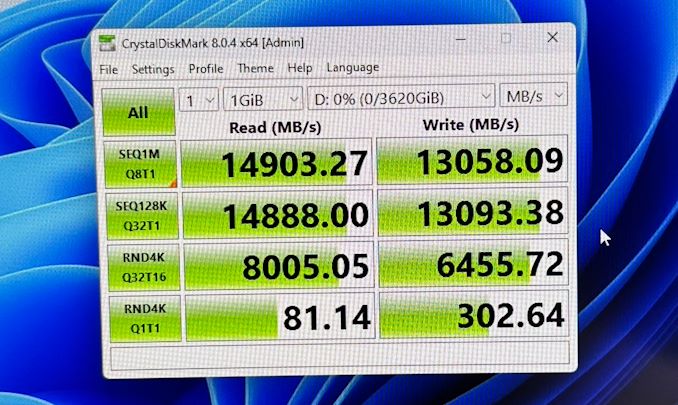
Silicon Motion and its partners are currently finalizing the firmware for the SM2508 and qualifying it with various manufacturers' TLC NAND. The chip also supports QLC NAND, though we'd be surprised to see anyone pair such a powerful controller with slower NAND so soon.
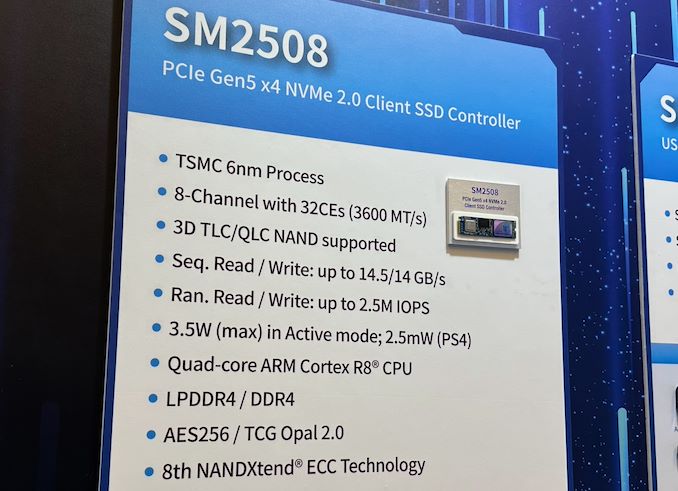
At Computex, Silicon Motion itself demonstrated an SM2508 drive in action at its booth. Various drive manufacturers also had SM2508-based drives on the floor as well, though only as static samples.
Antec's 'Performance 1M' Mini-ITX Chassis Can House a GeForce RTX 4090
Published: Jun 13nd 2024 2:00am on AnandTech
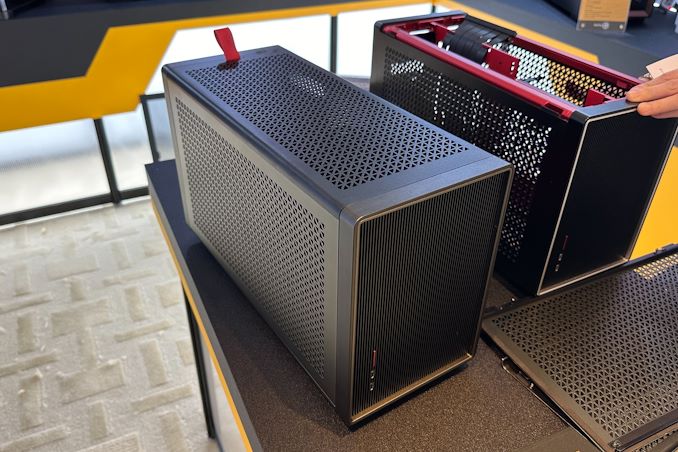
With the highly integrated nature of PCs these days, the Mini-ITX form-factor has become a very viable option for high-performance gaming system. With plenty of motherboards available for both AMD and Intel's latest platforms, equipping an ITX system with a CPU is easy enough. But the small size of the form factor means that housing an ultra-wide flagship-level graphics card remains an issue. For this year's Computex trade show, Antec was showing off their solution to the problem of giant video cards: the Performance 1M case, a Mini-ITX case with a separate chamber just for a large video card.
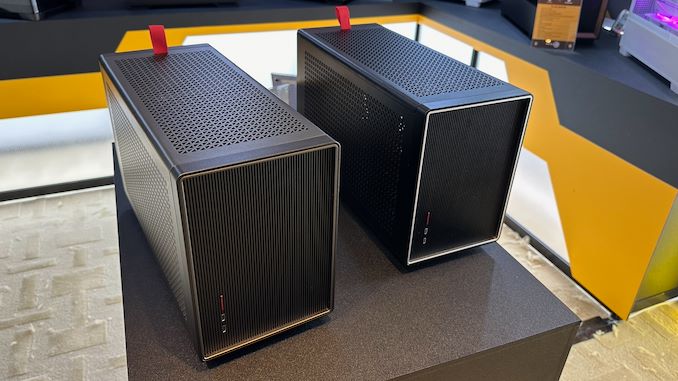
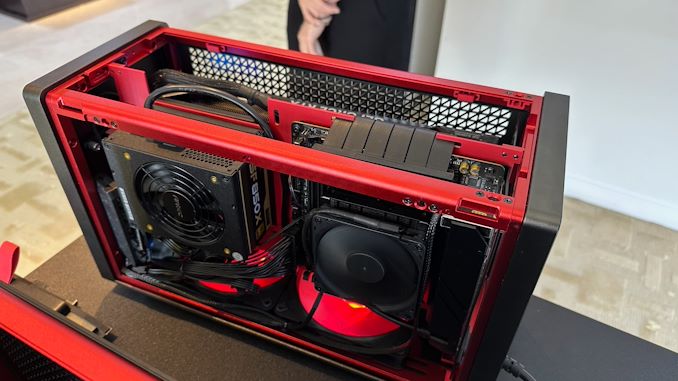
Antec's Performance 1M is a dual-chamber Mini-ITX chassis that splits off the video card from the rest of the system. The primary chamber houses a Mini-ITX motherboard and an SFX power supply, while the secondary chamber houses a huge graphics card. Notably, the two chambers are bridged using a PCIe riser cable, allowing the motherboard chamber to be far shorter than even a half-height PCIe card, while the video card chamber can hold a triple-slot video card parallel to the motherboard chamber, cutting down on wasted space. For Antec's Computex demo, the company had a triple-slot ASUS GeForce RTX 4090 installed to showcase how this worked.
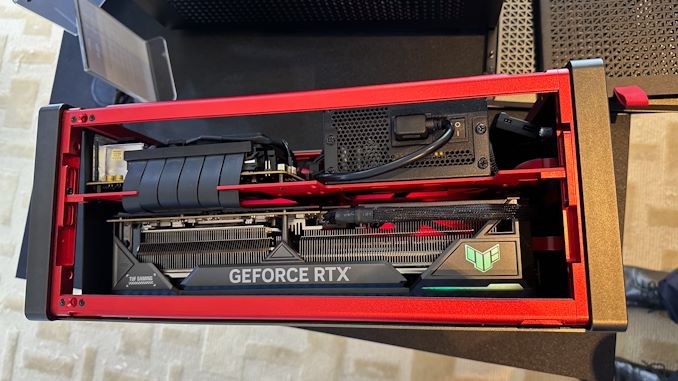
Antec's decision to allocate most of the case's volume to th video card chamber does come with a slight catch, however: it doesn't leave much space for a CPU cooler in the motherboard chamber. The short motherboard chamber means that system builders will have to use a low-profile cooler; these are readily available, but it does leave less thermal headroom overall for high-end CPUs. So there are still trade-offs for being able to accommodate a high-end video card.
Otherwise, the Performance 1M chassis from Antec look very stylish and are traditionally well built from stainless steel and aluminum. The chassis can be equipped with two 120-mm or two 140-mm coolers for extra airflow (which will help performance), one 2.5-inch SATA SSD, and even some RGB bling. To make the PC built inside a Performance 1M case more convenient to use, there are two USB Type-C ports on the front.
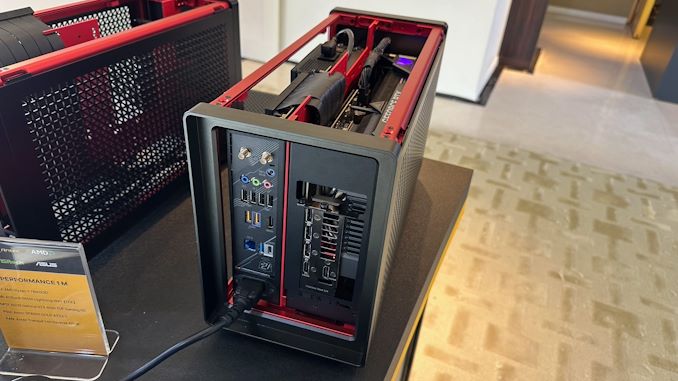
Of course, housing a GeForce RTX 4090 graphics card in a Mini-ITX chassis has its peculiarities when it comes to dimensions and Antec's Performance 1M measures 424×175×260mm, which is pretty large. On the other hand, for an ultra-high-performance gaming system, this is pretty compact.
Antec's Performance 1M Mini-ITX chassis will be available in gunmetal gray and matte black colors sometimes later this year. Pricing is something that the company is thinking about now, though keep in mind that we are talking about unique premium products.