Kioxia's High-Performance 3D QLC NAND Enables High-End High-Capacity SSDs
Published: Jul 5nd 2024 9:00am on AnandTech
This week, Kioxia introduced its new 3D QLC NAND devices aimed at high-performance, high-capacity drives that could redefine what we typically expect from QLC-based SSDs. The components are 1 Tb and 2 Tb 3D QLC NAND ICs with a 3600 MT/s interface speed that could enable M.2-2230 SSDs with a 4 TB capacity and decent performance.
Kioxia's 1 Tb (128 MB) and 2 Tb (256 TB) 3D QLC NAND devices are made on the company's BICS 8 process technology and feature 238 active layers as well as CMOS directly Bonded to Array (CBA) design, which implies that CMOS (including interface and buffers circuitry) is built on a specialized node and bonded to the memory array. Such a manufacturing process enabled Kioxia (and its manufacturing partner Western Digital) to achieve a particularly high interface speed of 3600 MT/s.
In addition to being one of the industry's first 2 Tb QLC NAND devices, the component features a 70% higher write power efficiency compared to Kioxia's BICS 5 3D QLC NAND devices, which is a bit vague statement as the new ICs have higher capacity and performance in general. This feature will be valuable for data centre applications, though I do not expect someone to use 3D QLC memory for write-intensive applications in general. Yet, these devices will be just what the doctor ordered for AI: read-intensive, content distribution, and backup storage.
It is interesting to note that Kioxia's 1 Tb 3D QLC NAND, optimized for performance, has a 30% faster sequential write performance and a 15% lower read latency than the 2 Tb 3D QLC component. These qualities (alongside a 3600 MT/s interface) promise to make Kioxia's 1 Tb 3D QLC competitive even for higher-end PCIe Gen5 x4 SSDs, which currently exclusively use 3D TLC memory.
The remarkable storage density of Kioxia's 2Tb 3D QLC NAND devices will allow customers to create high-capacity SSDs in compact form factors. For instance, a 16-Hi stacked package (measuring 11.5 mm × 13.5 mm × 1.5 mm) can be used to build a 4TB M.2-2230 drive or a 16TB M.2-2280 drive. Even a single 16-Hi package could be enough to build a particularly fast client SSD.
Kioxia is now sampling its 2 Tb 3D QLC NAND BiCS 8 memory with customers, such as Pure Storage.
"We have a long-standing relationship with Kioxia and are delighted to incorporate their eighth-generation BiCS Flash 2Tb QLC flash memory products to enhance the performance and efficiency of our all-flash storage solutions," said Charles Giancarlo, CEO of Pure Storage. "Pure's unified all-flash data storage platform is able to meet the demanding needs of artificial intelligence as well as the aggressive costs of backup storage. Backed by Kioxia technology, Pure Storage will continue to offer unmatched performance, power efficiency, and reliability, delivering exceptional value to our customers."
"We are pleased to be shipping samples of our new 2Tb QLC with the new eighth-generation BiCS flash technology," said Hideshi Miyajima, CTO of Kioxia. "With its industry-leading high bit density, high speed data transfer, and superior power efficiency, the 2Tb QLC product will offer new value for rapidly emerging AI applications and large storage applications demanding power and space savings."
There is no word on when the 1 Tb 3D QLC BiCS 8 memory will be sampled or released to the market.
The Lian Li EDGE EG1000 1000W ATX 3.1 PSU Review: Power On The Edge
Published: Jul 5nd 2024 9:00am on AnandTech
Lian Li Industrial Co., Ltd., established in 1983, is a Taiwanese company specializing in the manufacture of computer cases, power supplies, and accessories. They are one of the oldest players in the PC market and are known for their focus on aluminum-based designs. Lian Li produces a range of products aimed at both consumer and industrial markets, with the company's offerings including mid-tower and full-tower cases and more compact cases for smaller builds. Amongst consumers and PC enthusiasts, Lian Li's products are recognized for their build quality, modularity, and innovative features, catering to a diverse set of needs in the PC building community.
This review focuses on the latest addition to Lian Li's PSU lineup: the EG1000 Platinum ATX 3.1 PSU. This power supply unit partially complies with the ATX 3.1 design guide (the paragraphs related to electrical quality and performance). It is designed to meet the demanding requirements of modern gaming PCs, with its specifications indicating good efficiency and robust power delivery. Featuring fully modular cables with individually sleeved wires, dynamic fan control for optimal cooling, and advanced internal topologies, the EG1000 Platinum aims to provide both reliability and performance. However, behind its long list of features, the highlight of the EG1000 Platinum is the shape of the chassis itself, which forgoes the ATX cuboid shape and standard length.
Noctua Launches New Flagship Cooler: NH-D15 G2 with LGA1851 CPUs Support
Published: Jul 3nd 2024 9:30am on AnandTech
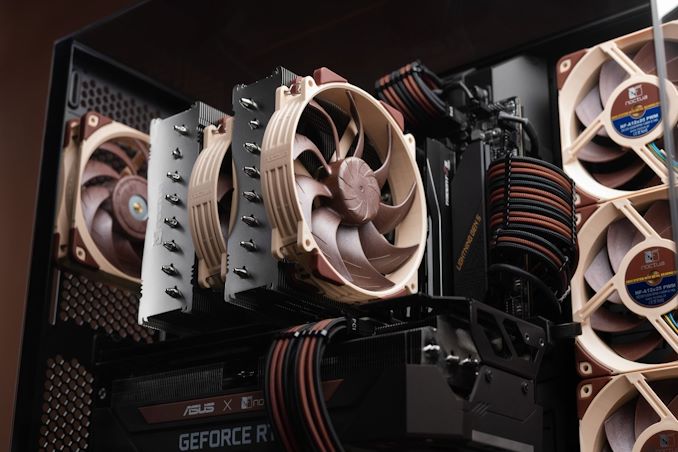
On Tuesday, Noctua introduced its second-generation NH-D15 cooler, which offers refined performance and formally supports Intel's next-generation Arrow Lake-S processors in LGA1851 packaging. Alongside its NH-D15 G2 CPU cooler, Noctua also introduced its NF-A14x25r G2 140mm fans.
The Noctua NH-D15 G2 is an enhanced version of the popular NH-D15 cooler with eight heat pipes, two asymmetrical fin-stack and two speed-offset 140-mm PWM fans (to avoid acoustic interaction phenomena such as periodic humming or intermittent vibrations). According to the manufacturer, these key components are tailored to work efficiently together to deliver superior quiet cooling performance, rivalling many all-in-one water cooling systems and pushing the boundaries of air cooling efficiency.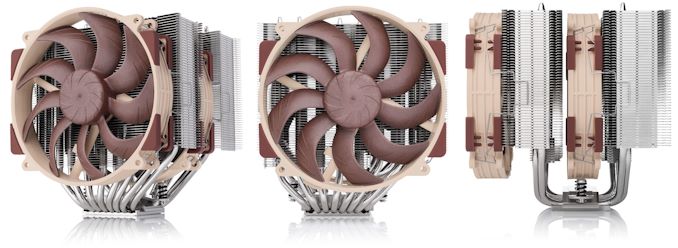
Noctua offers the NH-D15 G2 in three versions to address the specific requirements of modern CPUs. The regular version is versatile and can be used for AMD's AM5 processors and Intel's LGA1700 CPUs with included mounting accessories. The HBC (High Base Convexity) variant is tailored for LGA1700 processors, especially those subjected to full ILM pressure or those that have deformed over time, ensuring excellent contact quality despite the concave shape of the CPU. Finally, the LBC (Low Base Convexity) version is tailored for flat rectangular CPUs, providing optimal contact on AMD's AM5 and other similar processors.

While there are three versions of NH-D15 G2 aimed at different processors, they are all said to be compatible with a wide range of motherboards and other hardware. The new coolers' offset construction ensures clearance for the top PCIe x16 slot on most current motherboards. Additionally, they feature the upgraded Torx-based SecuFirm2+ multi-socket mounting system and come with Noctua's NT-H2 thermal compound.
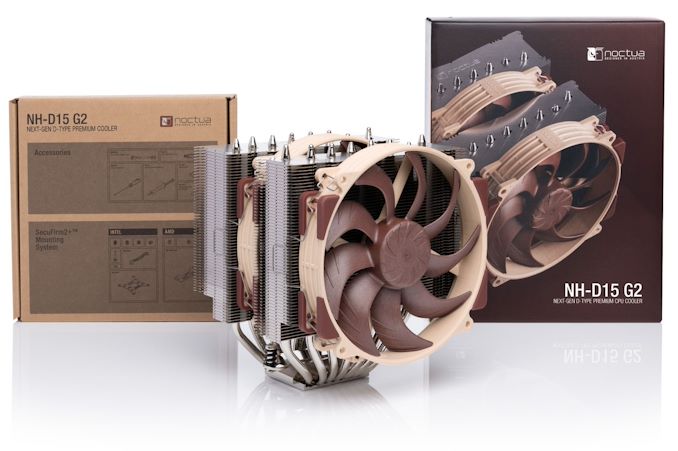
For those looking to upgrade existing coolers like the NH-D15, NH-D15S, or NH-U14S series, Noctua is also releasing the NF-A14x25r G2 fans separately. These round-frame fans are fine-tuned in single and dual fan packages to minimize noise levels while offering decent cooling performance.
Finally, Noctua is also prepping a square-frame version of the NF-A14x25 G2 fan for release in September. This variant targets water-cooling radiators and case-cooling applications and promises to extend the versatility of Noctua's cooling solutions further.
All versions of Noctua's NH-D15 G2 coolers cost $149.90/€149.90. One NF-A14x25 G2 fan costs $39.90/€39.90, whereas a package of two fans costs $79.80/€79.80. The cooler is backed with a six-year warranty.
The Enermax PlatiGemini 1200W ATX 3.1 + ATX12VO PSU Review: The Swiss Army Knife
Published: Jul 2nd 2024 8:00am on AnandTech
In the retail PC PSU space, most of the focus on new standards and their capabilities in the past couple of years has been on ATX 3.0 and it's quick follow-up successor, ATX 3.1. And while the revised ATX standard is certainly the most important new standard for the rank-and-file PC builder, it's not the only standard that has been released as of late. Intel and its partners have also developed a standard, that in some respects, goes even farther out by dropping some of the legacy aspects of ATX and its increasingly esoteric secondary voltages: ATX12VO.
Short for "ATX 12 Volts Only", ATX12VO is a standard that's been slower to take off as it makes a pretty hard break with backwards compatibility. But with so many motherboard functions running off of 12V (CPUs and GPUs, for a start), the need for a PSU to provide secondary voltages like 3.3V and 5V just aren't what they once were 20 years ago - or even 10. So we've slowly seen PC manufacturers and motherboard makers test the waters, with a handful of designs using the more petite ATX standard.
Meanwhile on the power supply side of things, the outcome has been a bit more interesting, if messy. While ATX12VO motherboards need matching PSUs, there's nothing to say that such a PSU can only be ATX12VO. To reference an ancient meme, the thought at some PSU manufacturers has been "why not both?", leading to high-end PSUs that can bridge the compatibility gap by offering both ATX 3.1 and ATX12VO compatibility.
The first example of such a PSU to make it in our labs is Enermax's new PlatiGemini 1200W PSU. Designed to be the Swiss knife of modern top-tier PCs, Enermax's PSU offers support for both ATX 3.1 and ATX12VO - ensuring it can power virtually any PC - while driving both modes with a sizeable 1200W design that can pretty much power virtually any desktop PC one can hope to build today. Plus, with features like fully modular cables with per-wire sleeving, a dynamic hybrid fan control for optimal cooling, and advanced power topologies, the PlatiGemini 1200W aims to deliver both reliability and performance on top of its multi-mode compatibility. The end result is a very interesting (if premium) product that can do it all.
SK hynix Wraps up Dev Work on High-End PCB01 PCIe 5.0 SSD for OEMs, Launching Later This Year
Published: Jun 29nd 2024 11:00am on AnandTech
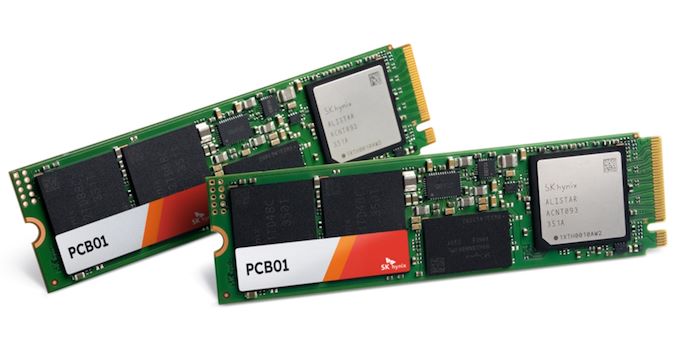
SK hynix early in Friday announced that the company has finished the development of it's PCB01 PCIe Gen5 SSD, the company's forthcoming high-end SSD for OEMs. Based on the company's new Alistar platform, the PCB01 is designed to deliver chart-topping performance for client machines. And, as a sign of the times, SK hynix is positioning the PCB01 for AI PCs, looking to synergize with the overall industry interest in anything and everything AI.
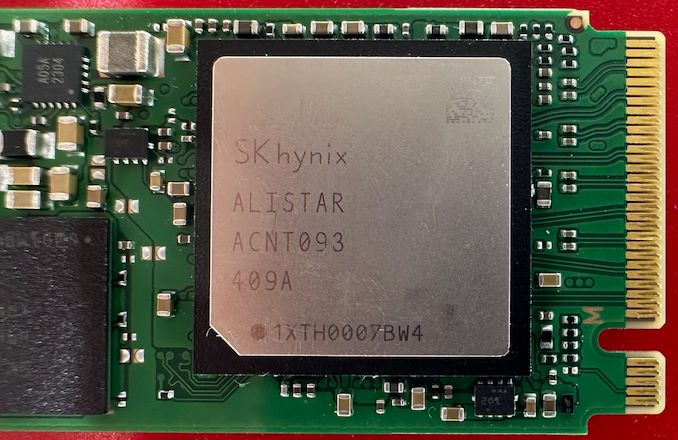
The bare, OEM-focused drives have previously been shown off by SK hynix, and make no attempt to hide what's under the hood. The PCB01 relies on SK hynix's Alistar controller, which features a PCIe Gen5 x4 host interface on the front end and eight NAND channels on the back end, placing it solidly in the realm of high-end SSDs. Paired with the Alistar controller is the company's latest 238-layer TLC NAND (H25T1TD48C & H25T2TD88C), which offers a maximum transfer speed of 2400 MT/second. Being that this is a high-end client SSD, there's also a DRAM chip on board, though the company isn't disclosing its capacity.
As with other high-end PCIe 5.0 client SSDs, SK hynix is planning on hitting peak read speeds of up to 14GB/second on the drive, while peak sequential write speeds should top 12GB/second (with pSLC caching, of course) – performance figures well within the realm of possibility for an 8 channel drive. As for random performance, at Computex the company was telling attendees that the drives should be able to sustain 4K random read and write rates of 2 million IOPS, which is very high as well. The SSDs are also said to consume up to 30% less power than 'predecessors,' according to SK hynix, though the company didn't elaborate on that figure. Typically in the storage industry, energy figures are based on iso-performance (rather than peak performance) – essentially measuring energy efficiency per bit rather than toal power consumption – and that is likely the case here as well.
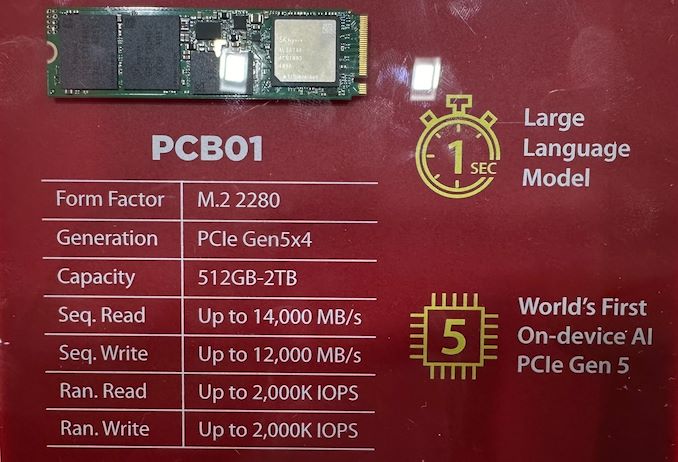
At least initially, SK Hynix plans to release its PCB01 in three capacities – 512 GB, 1 TB, and 2 TB. The company has previously disclosed that their 238L TLC NAND has a capacity of 512Gbit, so these are typical capacity figures for single-sided drives. And while the focus of the company's press release this week was on OEM drives, this is the same controller and NAND that is also going into the company's previously-teased retail Platinum P51 SSD, so this week's reveal offers a bit more detail into what to expect from that drive family as well.
Specs aside, Ahn Hyun, the Head of the N-S Committee at SK hynix, said that multiple global CPU providers for on-device AI PCs are seeking collaboration for the compatibility validation process, which is underway, so expect PCB01 drives inside PCs in this back-to-school and holiday seasons.
"We will work towards enhancing our leadership as the global top AI memory provider also in the NAND solution space by successfully completing the customer validation and mass production of PCB01, which will be in the limelight," Ahn Hyun said.
The Lian Li Hydroshift LCD 360S AIO Cooler Review: Sleek, Stylish, and Lively
Published: Jun 28nd 2024 9:00am on AnandTech
Among the packed field of PC hardware manufacturers, Lian Li is a company that arguably shouldn't even need an introduction. The quirky company has developed a devout following thanks to its focus on premium-quality aluminum computer cases that, more often that not, and come with in some rather unique designs. Over the years, the company has developed a solid reputation for its meticulous craftsmanship, durability, and elegant aesthetics. And consequently, when the company made the decision to expand beyond aluminum cases and in to other PC peripherals, that development attracted quite a bit of attention to see what kind of a touch Lian Li could bring to the rest of the PC ecosystem.
Lian Li's focus on premium products means that the company doesn't really make much in the way of products that are merely basic, and that kind of mentality has extended beyond cases and into the rest of their peripherals. Case in point is the subject of today's review: Lian Li's new all-in-one CPU cooler, the HydroShift LCD 360S AIO. Not content just to make a powerful 360 mm cooler, Lian Li has gone a step above by integrating recesses and other features to help hide the tubing around the cooler, and then for the coup de grace, added a high-quality 2.88-inch IPS display to the pump block.
Overall, this new product marks a significant milestone for Lian Li, as it combines advanced cooling technology with the company's signature aesthetic appeal, making for a cooler that's aimed at both enthusiasts and professional users seeking high-end thermal performance and visual customization. Overall, the HydroShift LCD 360S is undeniably designed first and foremost with aesthetics in mind, but the shiny pump block is backed up with one of the most powerful 360 mm cooler designs on the market today. So Lian Li is throwing everything they have at the new HydroShift coolers.
Overall, the 360S is part of a trio of HydroShift 360 mm coolers the company is launching this summer. All three share a similar design, although with some pump changes and the addition of RGB fan lighting, depending on the specific model, with the 360S effectively serving as the base model.
Micron: U.S. Fabs Will Start Operating in 2026 – 2029
Published: Jun 27nd 2024 9:00am on AnandTech

When Micron announced plans to build two new fabs in the U.S. in 2022, the company vaguely said both would come online by the decade's end. Then, in 2023, it began to optimize its spending, which pushed production at these fabrication facilities. This week, the company outlined more precise timeframes for when its fabs in Idaho and New York will start operations: this will happen from calendar 2026 to calendar 2029.
"These fab construction investments are necessary to support supply growth for the latter half of this decade," a statement by Micron in its Q3 FY2024 financial results report reads. "This Idaho fab will not contribute to meaningful bit supply until fiscal 2027 and the New York construction capex is not expected to contribute to bit supply growth until fiscal 2028 or later. The timing of future [wafer fab equipment] spend in these fabs will be managed to align supply growth with expected demand growth."
Micron's fiscal year 2027 starts in September 2026, so the new fab near Boise, Idaho, is set to start operations between September 2026 and September 2027. The company's fiscal 2028 starts in September 2027, so the fab will likely begin operations in calendar 2028 or later, probably depending on the demand for DRAM memory in the coming years. That said, Micron's U.S. memory fabs will begin operations between late 2026 and 2029, which aligns with the company's original plans.
Construction of the fab in Idaho is well underway. In contrast, construction of the New York facility has yet to begin as the company is working on regulatory and permitting processes in the state.
Micron's capital expenditure (CaPex) plan for FY2024 is approximately $8.0 billion, with a decrease in year-over-year spending on wafer fabrication equipment (WFE). In Q4 FY2024, the company will spend around $3 billion on fab construction, new wafer fab tools, and various expansions/upgrades.
Looking ahead to FY2025, the company plans a substantial increase in capex, targeting a mid-30s percentage of revenue to support various technological and facility advancements. In particular, it expects its quarterly CapEx to average above the $3 billion level seen in the fourth quarter of FY2024, which means that it plans to spend about $12 billion in its fiscal 2025, which begins in late September.
Half or more of the total CapEx increase in FY2025 (i.e., over $2 billion) will be allocated to constructing new fabs in Idaho and New York. Meanwhile, the FY2025 CapEx will significantly rise to fund high-bandwidth memory (HBM) assembly and testing and the construction of fabrication and back-end facilities. This increase also includes investments in technology transitions to meet growing demand.
"Fab construction in Idaho is underway, and we are working diligently to complete the regulatory and permitting processes in New York," said Sanjay Mehrotra, chief executive officer of Micron, at the company's conference call with investors and financial analysts (via SeekingAlpha). "This additional leading-edge greenfield capacity, along with continued technology transition investments in our Asia facilities, is required to meet long-term demand in the second half of this decade and beyond. These investments support our objective to maintain our current bit share over time and to grow our memory bit supply in line with long-term industry bit demand."
Frore Unveils Waterproof AirJet Mini Sport for Smartphones
Published: Jun 26nd 2024 7:00am on AnandTech

Over the past couple of years, Frore Systems has demonstrated several ways that its AirJet solid-state active cooling systems can be used to improve cooling in fanless devices like laptops, tablets, SSDs, and edge computing devices. But there are a subset of those applications that need their cooling options to also be waterproof, and Frore is looking to address those as well. To that end, this week Frore introduced its AirJet Mini Sport, a waterproof, IP68-rated solid-state cooling device that is aimed at use in smartphones and action cameras.
Introduced at MWC Shanghai to attract attention of China-based handset vendors, edge and industrial computing devices, and action cameras, the AirJet Mini Sport is an enhanced version of Frore's AirJet Mini Slim. This version has been fully waterproofed, offering IP68-level protection that allows it to work while being submerged in over 1.5 meters of water for up to 30 minutes. Internally, the AirJet Mini Sport can effectively dissipate 5.25 Watts of heat by generating 1750 Pascals of back pressure, while consuming 1 Watt of energy itself.
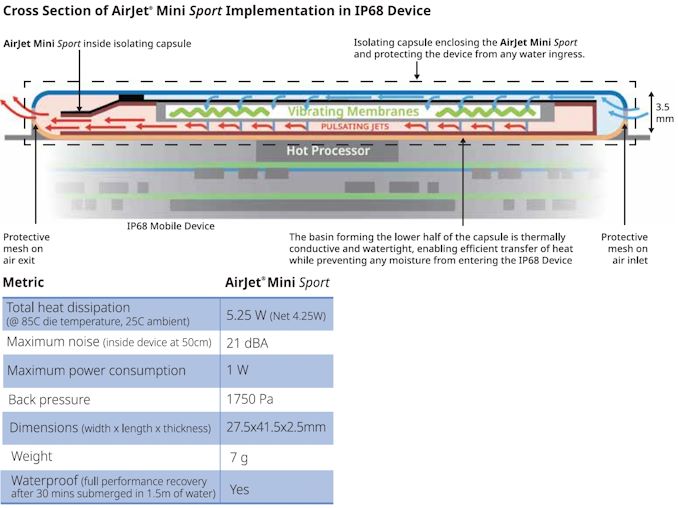
Elsewhere, Frore claims that the AirJet Mini Sport can be used to provide 2.5 Watts of cooling capacity to smartphones. Which, although not enough to cover the complete power consumption/heat dissipation of a high-end SoC, would have a significant impact on both burst and steady-state performance by allowing those chips to run at peak clocks and power for longer periods of time.
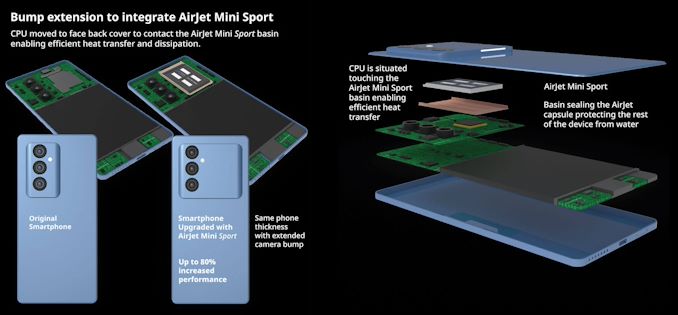
To ensure consistent performance of Frore's AirJet Mini Sport in diverse environments, the cooling device includes features such as dust resistance and self-cleaning. In addition, just like AirJet Mini Slim, the Sport-badged version its own thermal sensor to control its own operation and maintain optimal performance. As a result, Frore claims that smartphones and action cameras with the AirJet Mini Sport can achieve up to 80% better performance.
"We are excited to announce the waterproof AirJet Mini Sport," said Dr. Seshu Madhavapeddy, founder and CEO of Frore Systems. "Consumers demand increased performance in compact devices they can use anywhere, on land or in water. AirJet unleashes device performance, now enabling users to do more with their IP68 dustproof and waterproof devices."
NVIDIA's AD102 GPU Pops Up in MSI GeForce RTX 4070 Ti Super Cards
Published: Jun 26nd 2024 10:00am on AnandTech
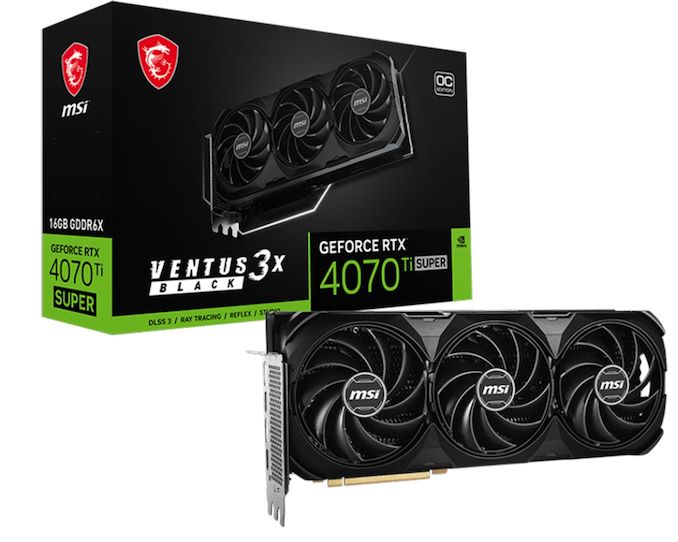
As GPU families enter the later part of their lifecycles, we often see chip manufacturers start to offload stockpiles of salvaged chips that, for one reason or another, didn't make the grade for the tier of cards they normally are used in. These recovered chips are fairly unremarkable overall, but they are unsold silicon that still works and has economic value, leading to them being used in lower-tier cards so that they can be sold. And, judging by the appearance of a new video card design from MSI, it looks like NVIDIA's Ada Lovelace generation of chips has reached that stage, as the Taiwanese video card maker has put out a new GeForce RTX 4070 Ti Super card based on a salvaged AD102 GPU.
Typically based on NVIDIA's AD103 GPU, NVIDIA's GeForce RTX 4070 Ti Super series sits a step below the company's flagship RTX 4080/4090 cards, both of which are based on the bigger and badder AD102 chip. But with some number of AD102 chips inevitably failing to live up to RTX 4080 specifications, rather than being thrown out, these chips can instead be used to make RTX 4070 cards. Which is exactly what MSI has done with their new GeForce RTX 4070 Ti Super Ventus 3X Black OC graphics card.
The card itself is relatively unremarkable – using a binned AD102 chip doesn't come with any advantages, and it should perform just like regular AD103 cards – and for that reason, video card vendors rarely publicly note when they're doing a run of cards with a binned-down version of a bigger chip. However, these larger chips have a tell-tale PCB footprint that usually makes it obvious what's going on. Which, as first noticed by @wxnod, is exactly what's going on with MSI's card.
 Ada Lovelace Lineup: MSI GeForce RTX 4070 TiS (AD103), RTX 4070 TiS (AD102), & RTX 4090 (AD102)
The tell, in this case, is the rear board shot provided by MSI. The larger AD102 GPU uses an equally larger mounting bracket, and is paired with a slightly more complex array of filtering capacitors on the back side of the board PCB. Ultimately, since these are visible in MSI's photos of their GeForce RTX 4070 Ti Super Ventus 3X Black OC, it's easy to compare it to other video cards and see that it has exactly the same capacitor layout as MSI's GeForce RTX 4090, thus confirming the use of an AD102 GPU.
Chip curiosities aside, all of NVIDIA GeForce RTX 4070 Ti Super graphics cards – no matter whether they are based on the AD102 or AD103 GPU – come with a GPU with 8,448 active CUDA cores and 16 GB of GDDR6X memory, so it doesn't (typically) matter which chip they carry. Otherwise, compared to a fully-enabled AD102 chip, the RTX 4070 Ti Super specifications are relatively modest, with fewer than half as many CUDA cores, underscoring how the AD102 chip being used in MSI's card is a pretty heavy salvage bin.
As for the rest of the card, MSI GeForce RTX 4070 Ti Super Ventus 3X Black OC is a relatively hefty card overall, with a cooling system to match. Being overclocked, the Ventus also has a slightly higher TDP than normal GeForce RTX 4070 Ti Super cards, weighing in at 295 Watts, or 10 Watts above baseline cards.
Meanwhile, MSI is apparently not the only video card manufacturer using salvaged AD102 chips for GeForce RTX 4070 Ti Super, either. @wxnod has also posted a screenshot obtained on an Inno3D GeForce RTX 4070 Ti Super based on an AD102 GPU.
Two Is Better Than One: LG Starts Production of 13-inch Tandem OLED Display for Laptops
Published: Jun 25nd 2024 9:00am on AnandTech

OLED panels have a number of advantages, including deep blacks, fast response times, and energy efficiency; most of these stemming from the fact that they do not need backlighting. However they also have drawbacks, as well, as trying to drive them to be as bright as a high-tier LCD will quickly wear out the organic material used. Researchers have been spending the past couple of decades developing ways to prolong the lifespans of OLED materials, and recently LG has put together a novel (if brute force) solution: halve the work by doubling the number of pixels. This is the basis of the company's new tandem OLED technology, which has recently gone into mass production.
The Tandem OLED technology introduced by LG Display uses two stacks of red, green, and blue (RGB) organic light-emitting layers, which are layered on top fo each other, essentially reducing how bright each layer needs to individually be in order to hit a specific cumulative brightness. By combining multiple OLED pixels running at a lower brightness, tandem OLED displays are intended to offer higher brightness and durability than traditional single panel OLED displays, reducing the wear on the organic materials in normal situations – and by extension, making it possible to crank up the brightness of the panels well beyond what a single panel could sustain without cooking itself. Overall, LG claims that tandem panels can hit over three-times the brightness of standard OLED panels.
The switch to tandem panels also comes with energy efficiency benefits, as the power consumption of OLED pixels is not linear with the output brightness. According to LG, their tandem panels consume up to 40% less power. More interesting from the manufacturing side of matters, LG's tandem panel stack is 40% thinner (and 28%) lighter than existing OLED laptop screens, despite having to get a whole second layer of pixels in there.
In terms of specifications, the 13-inch tandem OLED panel feature a WQXGA+ (2880×1800) resolution and can cover 100% of the DCI-P3 color gamut. The panel is also certified to meet VESA's Display HDR True Black 500 requirements, which among other things, requires that it can hit 500 nits of brightness. And given that this tech is meant to go into tablets and laptops, it shouldn't come as any surprise that the display panel is also touch sensitive, as well.
"We will continue to strengthen the competitiveness of OLED products for IT applications and offer differentiated customer value based on distinctive strengths of Tandem OLED, such as long life, high brightness, and low power consumption," said Jae-Won Jang, Vice President and Head of the Medium Display Product Planning Division at LG Display.
Without any doubts, LG's Tandem OLED display panel looks impressive. The company is banking on it doing well in the high-end laptop and tablet markets, where manufacturers have been somewhat hesitant to embrace OLED displays due to power concerns. The technology has already been adopted by Apple for their most recent iPad Pro tablets, and now LG is making it available to a wider group of OEMs.
What remains to be seen is the technology's cost. Computer-grade OLED panels are already a more expensive option, and this one ups the ante with two layers of OLED pixels. So it isn't a question of whether it will be reserved for premium, high-margin devices, but a matter of just how much it will add to the final price tag.
For now, LG Display does not disclose which PC OEMs are set to use its 13-inch Tandem OLED panel, though as the company is a supplier to virtually all of the PC OEMs, there's little doubt it should crop up in multiple laptops soon enough.